
About Arbon Earth
Arbon Earth is a marine-based Carbon Dioxide Removal (CDR) company that removes CO₂ from the atmosphere by cultivating and sequestering macroalgae in the deep ocean.
By leveraging photosynthesis - nature's most efficient carbon capture process, the company combines high permanence and low costs with minimal ecosystem impact. Arbon Earth’s methods are built on scalable systems where biomass is lowered to the deep sea floor, isolating carbon from the atmosphere for centuries to millennia.
The sequestered CO₂ is verified and certified by a third party (ONCRA). Revenue is generated through the sale of negative CO₂ tons to corporations aiming to reach Net Zero or strengthen their sustainability profile. The CDR market is in an early but rapidly growing stage driven by both corporations and nations.

Our approach is:
Natural & low-tech — no artificial air capture machinery.
Good for communities — we partner with coastal and island societies, creating local jobs and shared knowledge about the sea.
Beneficial to nature — the OceanPods also act as marine nurseries, supporting biodiversity.
Third-party verified — our method is verified through ONCRA, the Open Natural Carbon Removal Accounting Platform.
Join the Movement
Whether you’re a company, government, or individual ready to make a difference, we’re here to help you take climate action that counts — with real, verified carbon removal you can trust. Let us help you remove CO₂
Meet the Team
-

Magnus Willner
CO-FOUNDER, CTO
Serial entrepreneur and inventor, with background in IT and ocean-based climate solutions.
Successful previous exits.
Experience translating marine science into deployable, scalable systems.
magnus@arbon.earth -

Carl Lindberg
CO-FOUNDER, M&V AND IP
Serial entrepreneur, mathematician, PhD, and AI expert.
Co-founder of Sigmastocks (acquired by Avanza), expertise in modeling and analysis.
Specialized in applying advanced quantitative methods to complex systems.
carl@arbon.earth -

Mai Thai
CO-FOUNDER, CSO
Serial entrepreneur. Co-founder of Sigmastocks (acquired by Avanza).
Background in building scalable, data- driven products and growth organizations.
Experience operating at the intersection of technology, and regulation.
mai@arbon.earth -
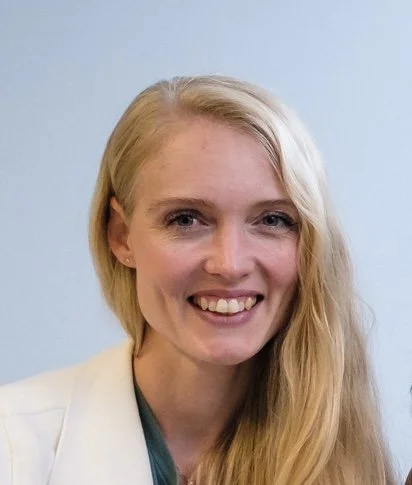
Nanna Stranne
CO-FOUNDER, CEO
Serial entrepreneur and former CEO of Sigmastocks (acquired by Avanza).
Proven leader with experience scaling regulated, high-growth companies.
Hands-on experience leading capital raises, investor relations, and company-building - early stage to exit.
nanna@arbon.earth
Milestones
Arbon Earth is advancing to become a leader in Ocean Based Carbon Capture and Storage, with island sites around the world.
2026 · Team, Permits, and Scaling
Team strengthened with Mai Thai and Nanna Stranne.
Expanded investor base with strategic investors increases long-term capital and confidence in the approach.
Focus on scalability - ongoing permit applications, production launch, and global expansion of verified ocean-based carbon removal.
2025 · Science, Customers, and Market
Feasibility studies and tests conducted in multiple regions: Indonesia, Iceland, and the Caribbean.
Cost-effective deep-sea verification technology further developed.
New customers and partners onboarded.
Complementary CDR methods developed: Alongside OceanPods, OceanBaskets are deployed near the coast using bamboo and macroalgae to enhance scalability.
2024 · Scaling and International Collaboration
Biodiversity and CDR studies in Kenya and Tanzania with local researchers and universities.
Collaboration with SMHI, Gothenburg University, and Chalmers on long-term carbon storage and permanence.
New angel investors join Arbon Earth.
2023 · Verification and Ocean Tests
Live tests conducted in the Atlantic and Indian Ocean.
OceanPods certified by ONCRA.
Innovation grant awarded by Vinnova.
2021–2022 · Idea and Foundation
Hackathon and concept: Magnus Willner organizes a climate hackathon with marine biologists, where the OceanPod concept is developed together with Carl Lindberg.
Company founded: Arbon Earth is established by Magnus Willner, Carl Lindberg, Mai Thai, and Nanna Stranne.
First OceanPod tests are conducted in Sweden and the Atlantic in collaboration with universities and research institutes.
Collaboration begins with the University of the Azores for deep-sea verification.
More Questions and Answers
-
Yes, in many countries. The Supreme Administrative Court in Sweden has granted deductions for climate compensation provided that the climate compensation is visible in the company's marketing.
-
Sure, everything helps! However, you will not be able to claim to be Net Zero.
For a company with 20 employees, that compensates 50% of their emissions, we get the following:
50% * 0.2ton/employee/month * €220/ton = €22/employee/month. This sum is comparable to half the cost of a standard gym membership, while being a really good thing for the climate, an appreciated social responsibility action, as well as a way to attract and keep talent.
-
We see you, and understand your challenges! Try to minimize administration and automize CSRD data collection, so you get more of your budget for new emission reductions, and CDR purchases.
Build your marketing messages around how many tonnes of emissions you have cut, and how many tonnes of CO2 you have removed.
Make sure your selected CDR suppliers have low emissions, high permanence, additionality, social responsibility.
Ask for budgets to at least cover half of your emissions.
-
Methane (CH4) emissions is not a problem for our deep ocean CDR method.
-
That's where the vast majority of emissions are. The small scope 1 and 2 is easier to reduce but is a small share of the total emissions.
Manufacturing companies of today are very much assembly factories. Most of the work and emissions are done by their suppliers.
Therefore, buying departments need to start selecting suppliers also based on Emissions, not only Price and Quality.
-
With the OceanPod method we provide floating micro nursery chambers where fish can grow during their first stages. In the long run this increases the amount of fish in the ocean, which in turn increases fishermen's income.
-
While biochar stores carbon effectively, in its production approximately the same amount of carbon that is stored in the biochar goes immediately back into the atmosphere.
Further, producing biochar delivers less heat than what regular burning of the same biomass would have produced. Therefore, more biomass is typically used when producing biochar than what would have been required to obtain the same heat energy using regular burning. This further increases the emissions of the biochar production process.
The obvious downside is that biochar sends carbon up into the atmosphere which is the opposite of what we want to do. In short, the climate doesn't care where the carbon emissions came from.
It is not optimal that 80% of CDR projects on the market is Biochar.
-
Science Based Target Initiative (SBTi) recommends doing both Emission Reductions and Carbon Capture, since both are important. They also recommend communicating with them separately.
-
Yes. We aim to live by the principles we promote. First, we reduce our own emissions as much as possible. We then purchase high-quality carbon removal (CDR) to reach carbon balance, ensuring that our captured carbon equals or exceeds our emissions. As a young company, we are already lifetime net zero.
-
When you support the climate, or your company even gets in carbon balance, you can show it in many ways. E.g. on the webpage, mail-footer or using a frame for a LinkedIn profile picture. It is important to remember to both do/communicate emission reductions and carbon removal.
-
The climate doesn’t care if the carbon we send up when burning comes from fossil, or other fuel. What we need to do is to reduce the amount of carbon that is released into the atmosphere, by using more of the emission free methods.
We often hear that the biomass burned would be decomposed into the atmosphere anyway, but it is not true if we use it in durable products. Then it will stay away from the atmosphere.
-
You receive a
certificate about your tonnes.
a communication kit.
information when the tonnes CO2 are removed.
-
Due to global warming and increased temperatures over 80% of the coral reefs have recently been bleached which can lead to it being destroyed.
See more here from Swedish National Television.
-
CDR: Carbon Dioxide Removal. Also called Carbon Capture. In Swedish: ”koldioxid-infångning”.
CO2: Carbon Dioxide
Net Zero: The term is used to signify that a person or organization removes more C02 than its activities emits. In Swedish: ”Nettonoll”. To be able to claim to be Net Zero, only climate compensation projects may be used where the purchase of carbon dioxide credits means that greenhouse gases are removed from the atmosphere and stored for at least 100 years.
Carbon Neutral: This term is similar to Net Zero, but is weaker in the sense that it also allows one to credit projects that only prevent greenhouse gas emissions.
Carbon Negative: When carbon removals exceed emissions for a person or organization.
Additionality: Refers to how much of the carbon removal of a particular climate project that would have occurred anyway, had the project not taken place.
Permanence: Refers to how long carbon, that has been removed from the atmosphere by some climate project, will remain removed from the atmosphere.
-
Awesome that you are starting! Try to automate as much as possible of your data collection so as much of the sustainability budget as possible can go to CDR.
You will report the emissions and the captures separately.
Please contact us to learn more or to receive an offer.
-
The activities of a generic person in the western world generates emissions around 8 tonnes yearly.
It is common for companies to only compensate for emissions related to their employees work activities.
WWF footprint calculator, Golow and Climate Hero have tools to see status of consumers and companies. And Wellfish and Goclimate have tools to automatically get your emissions based on your book keeping.
The average emissions for companies without production was 0,2 tons per employee per month according to a study by Removement in Stockholm, Sweden.
-
”Blue carbon” is the carbon dioxide that is captured by the world's oceans and coastal ecosystems, and thus does not stay in the atmosphere and contributes to the greenhouse effect.
This carbon is stored in the bottom sediment, or in the water column as DIC (dissolved inorganic carbon).
It is the aim of Arbon Earth to increase the amount of carbon stored in these habitats.
-
Permanence is very high, with effective storage timescales ranging from centuries to millennia.
The method transfers carbon from the atmosphere into the deep ocean (>1,000 m), where it becomes part of the large dissolved inorganic carbon (DIC) reservoir. Deep-ocean stratification and slow vertical mixing strongly limit re-exposure to the atmosphere, meaning that the return of this carbon is controlled by the ocean’s overturning circulation, which operates on timescales of approximately 700–2,000 years in the major ocean basins. As documented in the scientific literature and summarized in IPCC AR6, carbon transferred to the deep ocean is therefore isolated from the atmosphere for centuries to millennia.
A smaller fraction of the exported biomass (typically <10%) escapes remineralization and becomes buried in seafloor sediments, where it is stored on geological timescales. While sediment burial represents a minor share of the total carbon flux, it provides effectively permanent storage.
-
The additionality is very high. This storage of carbon that we construct wouldn’t have happened otherwise.
-
We provide new income possibilities for coastal communities.
We source material locally whenever possible.
-
Sinking algae to the deep ocean represents a managed enhancement of the natural biological pump. At appropriate scales, ecological impacts are expected to be limited and localized. Surface-ocean effects are minimized through conservative biomass removal, while deep-ocean ecosystems are adapted to low but variable organic carbon inputs. The biomass that reaches the seafloor resembles natural marine snow deposition. Because deployment is spatially distributed over large areas and designed to remain within natural variability of organic carbon fluxes, localized oxygen depletion or benthic disturbance is not expected.
-
Tree planting has fallen out of favor as a CDR method in recent years due to the complexity of such operations. To this end, we have chosen not to be involved in tree planting activities.
-
While it is good to take a holistic perspective, when the EU lobby pushes that companies need to report on 1100 data points, it creates massive administration.
So we hear many sustainability managers saying most of their climate budgets are consumed by administration and climate consultants, so they have little remaining resources for emission reductions or CDR.
But of course the consulting business is riding nice on the wave of incoming business.
Best for the climate would be to focus on two values:
Company emissions including scope 3, and
CDR purchased (tons of CO2)
Then there would be a great effective push forward for many companies.
But we all hope that administration can be automated, so companies have resources left to get some real climate improvements going.
-
We always work with algae species that are local to the production site, as well as bamboo.
-
Dried bamboo consists of around 50% carbon.
Dried macroalgae consist of around 28% carbon.
-
Yes. Our systems are designed so they have no negative impact on sea vessels.
OceanBaskets are made to sink straight to the sea floor. Hence, they can have no effect on sea vessels at all.
OceanPods are small and reasonably light, so they cannot harm a sea vessel if it runs into one. Further, we deploy offshore away from shipping routes and fishing areas.